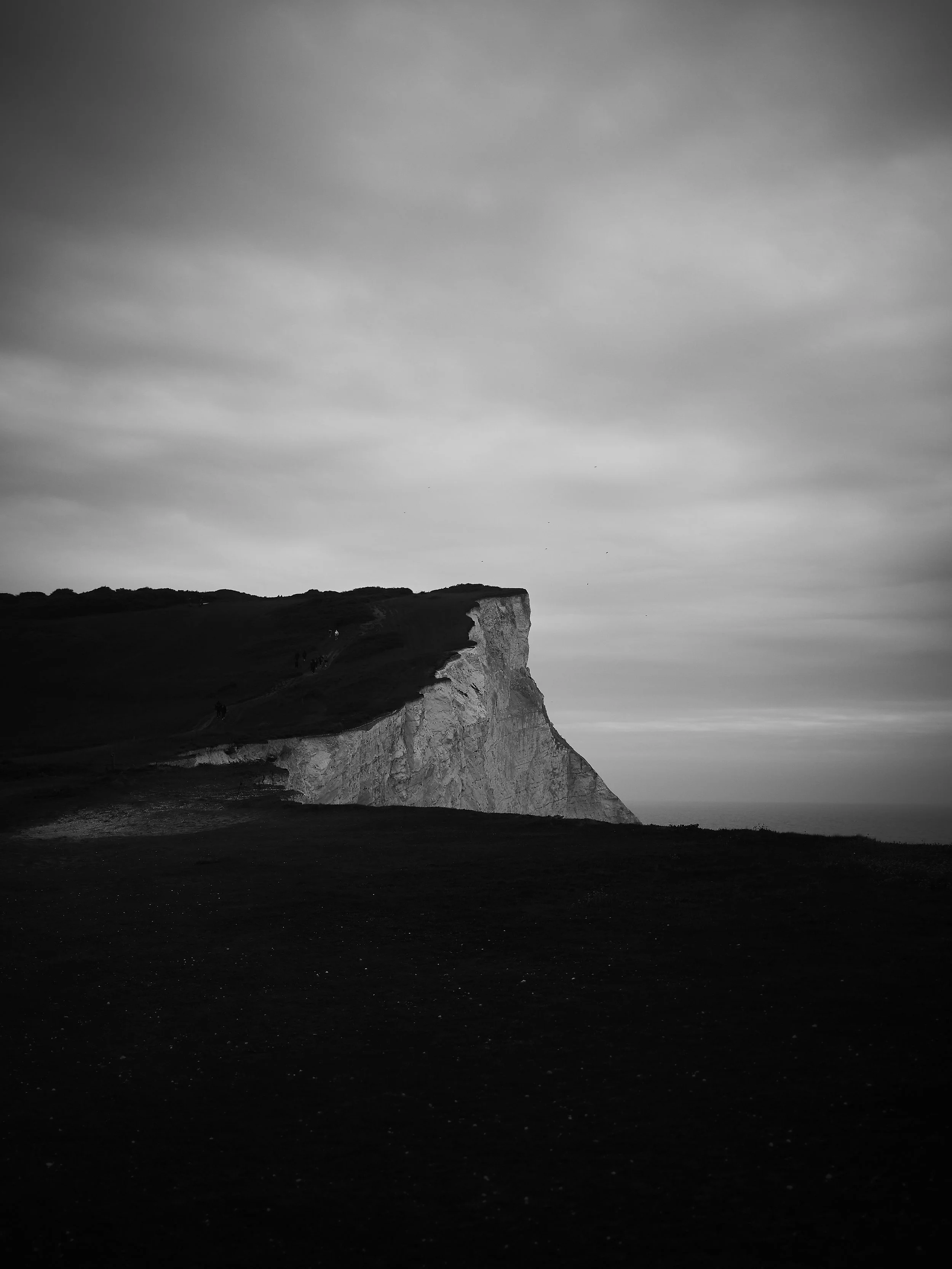
What Does Anemoia Mean?
Anemoia is the feeling of being homesick for somewhere you have never been. It is the ache you get looking at a black-and-white photograph of a street corner, knowing you were not there — and yet recognising something in it. The light. The stillness. The quality of an ordinary afternoon. It pulls at you in a way you cannot explain, because the logic of it makes no sense: you cannot miss what you never had. And yet you do. The feeling is not confusion. It is not delusion. It is something specific and real — a form of yearning that reaches past your own biography and lands somewhere further back, in a world you know only through images, sounds, and the faint impressions left behind by people who are no longer here. Anemoia is what happens when a moment that was never yours becomes, somehow, a memory.
Where Did the Word Come From?
Anemoia was coined in 2012 by John Koenig, an American writer and video-maker, as part of his ongoing project The Dictionary of Obscure Sorrows — a compendium of invented words for emotions that exist but have never had names. Koenig built the word from two Ancient Greek roots: ánemos (ἄνεμος), meaning wind, and nóos (νόος), meaning mind or thought. The construction is deliberate. He drew it in parallel with anemosis — a phenomenon in which a tree is warped by persistent, strong wind until it appears to bend backward, leaning into the force that shaped it. That image is the word. A mind bent backward by something it never touched. The word first appeared on his Tumblr in December 2012, accompanied by a short visual essay. It spread quietly, then widely. It appeared in The Kansas City Star in 2015, in BBC Science Focus in 2023, in The Guardian in 2024. It is now cited in Wiktionary, referenced by psychologists examining political behaviour, and used casually in everyday speech by people who stumbled across it once and felt, immediately, that it described something they had been carrying for years without a word.
Why Does Anemoia Feel So Real?
Because the emotion it names is not imaginary — only the memory is. Psychologists studying nostalgia have long observed that its emotional content does not depend on accuracy. We do not feel nostalgia because we remember things correctly. We feel it because certain images, sounds, and atmospheres trigger a sense of connection — to a place, a time, a way of life — that feels intimate and meaningful even when it logically cannot be. Anemoia is this same mechanism, shifted one step further. The trigger is not something you once lived, but rather something you found — a photograph, a film, a piece of music, a deserted building, a particular quality of late afternoon light in an empty street. And the feeling that follows is not a trick of the mind. It is a genuine response to a genuine encounter. Something in that image held something true, and some part of you recognised it. This is why photographs are one of the most reliable anemoia triggers there are. A photograph does not explain a moment. It holds it still. It offers a quality of light, a composition of shadows, a gesture frozen in time — and invites you to feel something about a world you were never part of. The gap between you and that world is exactly the right size. Far enough to be foreign. Close enough to be felt.
Anemoia and Photography
There is something particular about the relationship between anemoia and the photographic image. A painting of the past is a rendering — an interpretation, filtered through the painter's hand. A written account of the past is a translation — language standing in for experience. But a photograph of the past is a record. Light actually struck that surface. That street actually looked like this, on that day, in that light. The photograph is not a representation of the past. It is a trace of it. This is what makes old photographs such precise anemoia triggers. They are not someone's version of a moment. They are the moment itself, compressed into light and shadow and held there. When you look at them, you are not imagining a world. You are looking at one — a world that was completely real, completely present, completely alive, and is now completely gone. And for reasons that resist explanation, you feel its absence. This is what photography does at its best. Not document. Not illustrate. Evoke. The image becomes a kind of passage — between what was and what is, between a moment that belonged to someone else and a feeling that belongs entirely to you.
Why This Brand Is Called Anemoia
Every photograph made under this name is made in pursuit of that feeling. Not nostalgia for something that actually happened. Not documentation of a place or a person. But the capture of a moment that, when held still, becomes a passage to something you cannot quite name — a recognition without a memory, a familiar made strange, a world glimpsed through glass. The subject of this work is London. But London is not what this work is about. The city is where the light falls, where the quiet accumulates, where the particular quality of an ordinary afternoon — a bench, a lamp post, a figure in motion, a street reflecting the sky — becomes, for a moment, a kind of portal. The feeling this work is after is the feeling that you have been here before. That something in this image belongs to you, even though it doesn't. That you are somehow homesick for a life you are looking at for the first time. That is anemoia. And that is what this is.
Anemoia in Culture
The word has spread far beyond The Dictionary of Obscure Sorrows. It circulates on Reddit and TikTok, appears in academic papers on political psychology, and has been used to explain phenomena as varied as vintage aesthetic culture, heritage tourism, and the global appetite for mid-century furniture. It describes the pull of lofi music, the appeal of analogue photography, and the reason certain films set sixty years ago feel more emotionally immediate than anything made last week. Anemoia helps explain why we are drawn to things older than ourselves — not out of a wish to have lived then, but out of a recognition that something in those times reflects something in us now. The past becomes a mirror held at a certain angle, showing us not what was, but what we feel.
Common Questions About Anemoia
What is the definition of anemoia?
Anemoia is the nostalgia for a time or place you have never personally experienced. It is the feeling of longing for a past that was never yours. How do you pronounce anemoia? It is pronounced an-uh-moy-uh. Four syllables. The stress falls on the third: a-ne-moi-a.
Where does the word anemoia come from?
It was coined by American writer John Koenig in 2012 for The Dictionary of Obscure Sorrows. It is constructed from Ancient Greek roots: ánemos (wind) and nóos (mind), with reference to anemosis, the warping of a tree by strong winds until it bends backward.
Is anemoia a real word?
It is a neologism — a newly coined word. It does not appear in the Oxford English Dictionary, but it is listed in Wiktionary, cited in academic and journalistic contexts, and widely used in everyday speech. Words become real when people need them. People clearly need this one.
What triggers anemoia?
Old photographs, vintage film and music, historic architecture, aged objects, and particular qualities of light or atmosphere are among the most common triggers. Anything that makes you feel a connection to a time or place you never personally inhabited.
What is the difference between nostalgia and anemoia?
Nostalgia is the longing for something you once had — a place, a time, a period of your own life. Anemoia is the longing for something you never had. The emotional texture is similar. The object of it is different.
Anemoia is a cinematic photography brand based in London. The work explores the feeling the word describes — the nostalgia for a time never lived, rendered in light and shadow.